
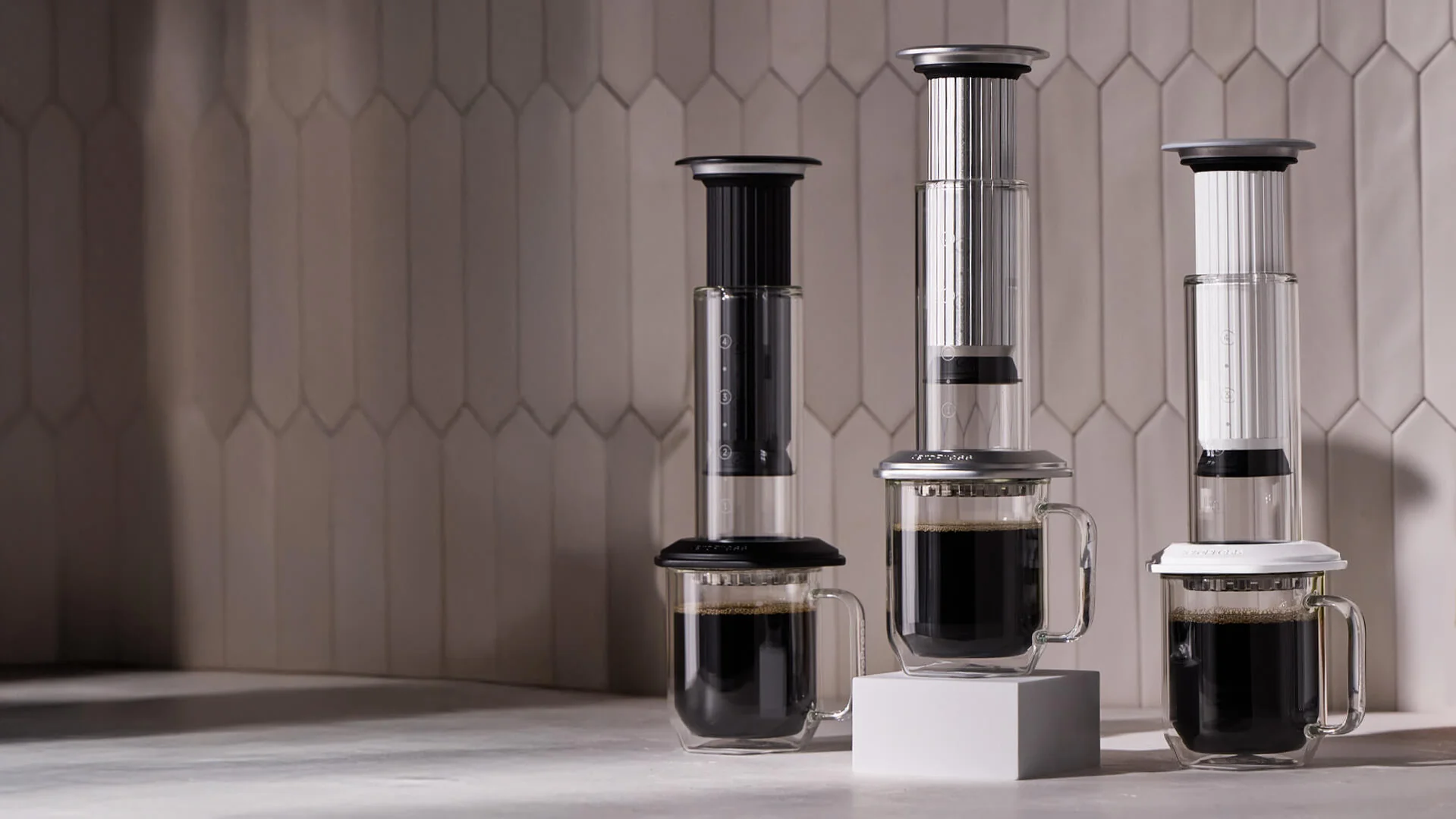
New
Premium Black & White
Our iconic 3 in 1 brewer handcrafted in double wall borosilicate glass and metal
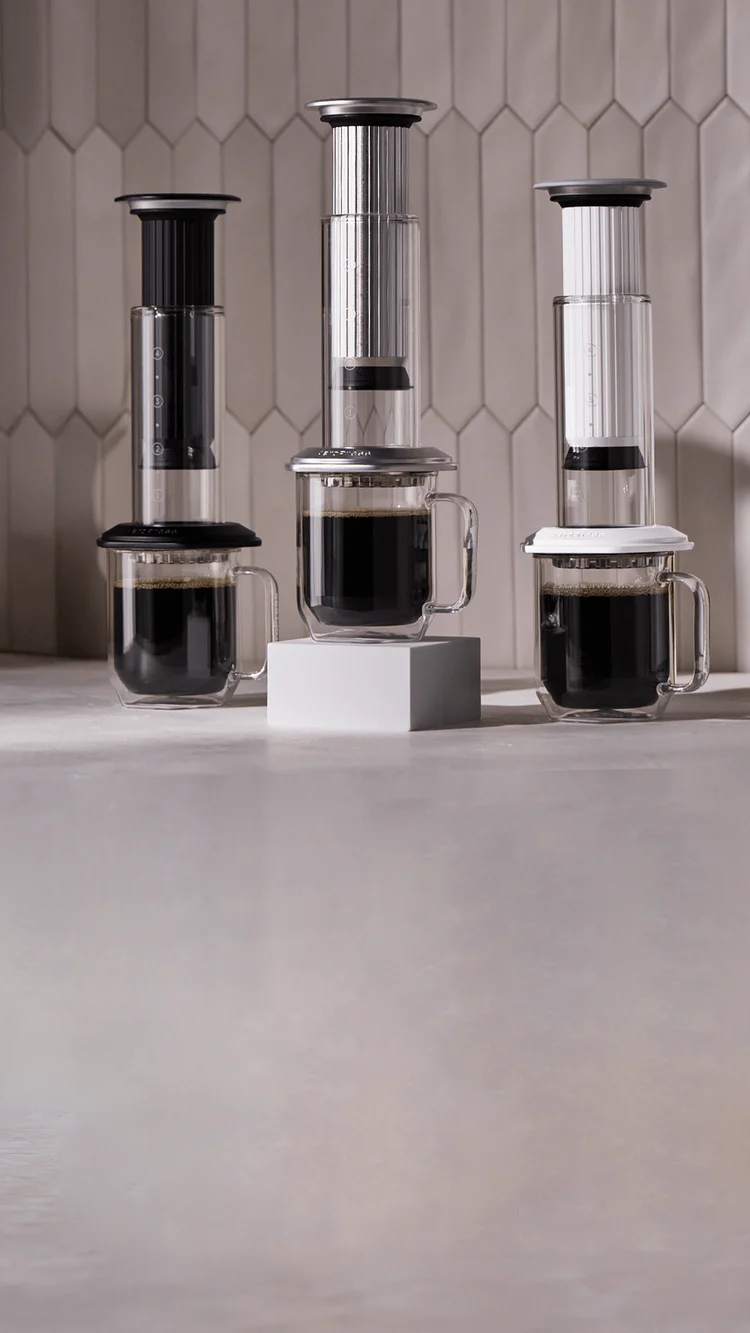

Brew Faster. Taste Better.
Sale!
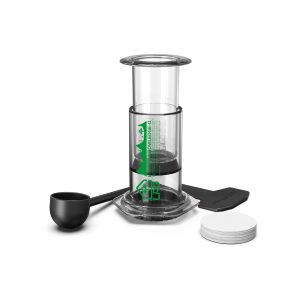

Original price was: $69.95.$14.99Current price is: $14.99.
Sale!
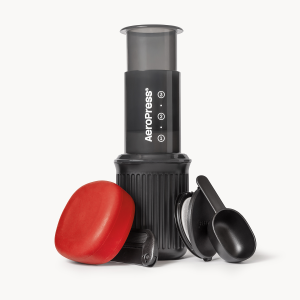
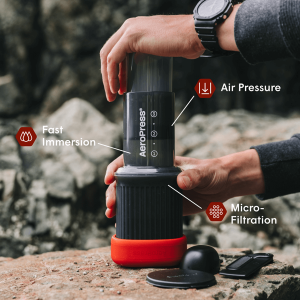
Coffee Makers
Original price was: $49.95.$14.99Current price is: $14.99.
Sale!
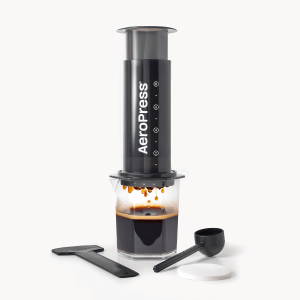
Coffee Makers
Original price was: $79.95.$23.99Current price is: $23.99.
Sale!
Coffee Makers
Original price was: $89.95.$26.99Current price is: $26.99.
Sale!
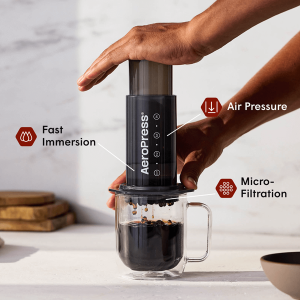
Coffee Makers
Original price was: $39.95.$11.99Current price is: $11.99.
Sale!
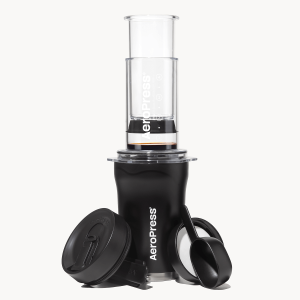
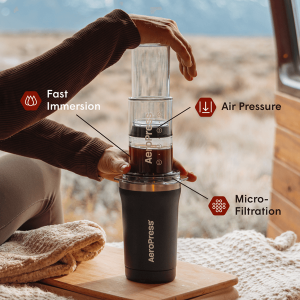
Coffee Makers
Original price was: $89.95.$26.99Current price is: $26.99.
Sale!
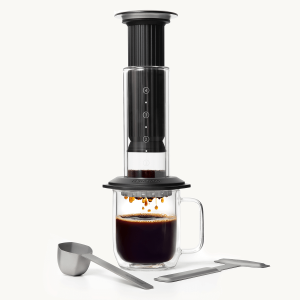
Coffee Makers
Original price was: $199.95.$59.99Current price is: $59.99.
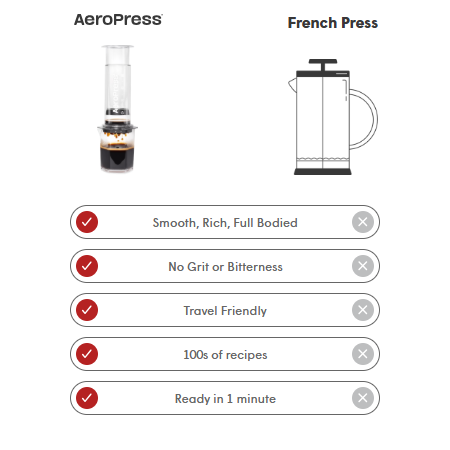
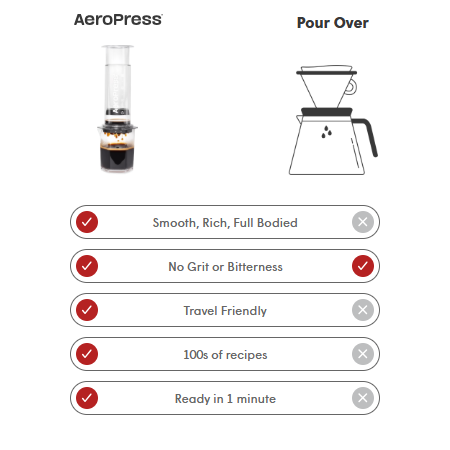
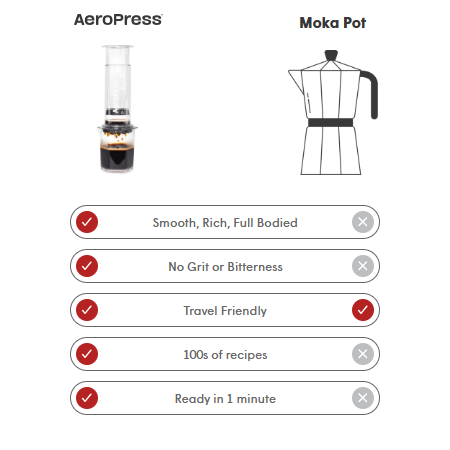
How Do We Stack Up?
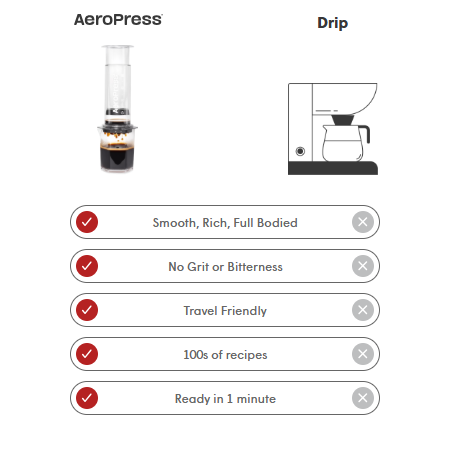
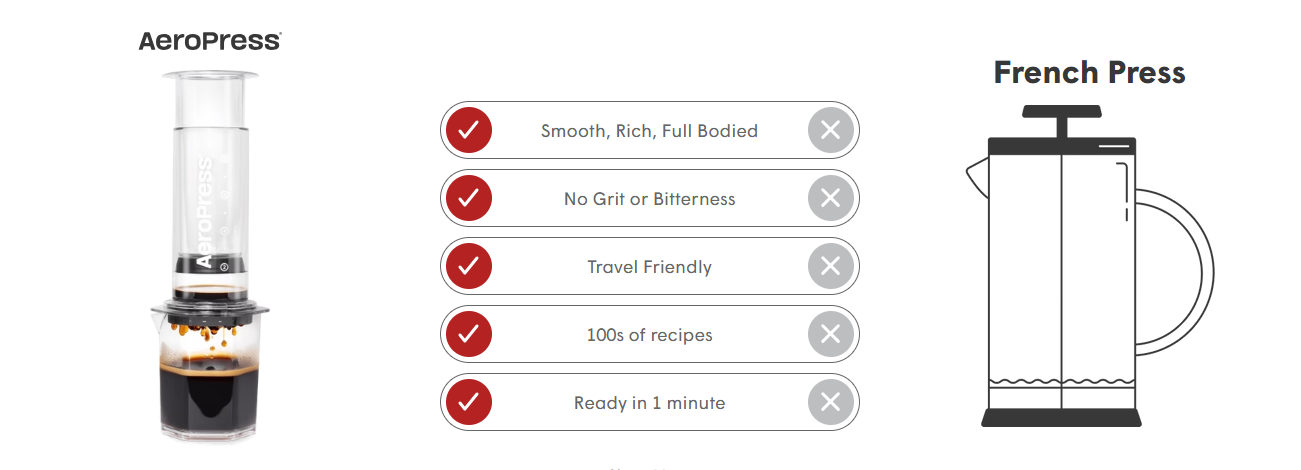
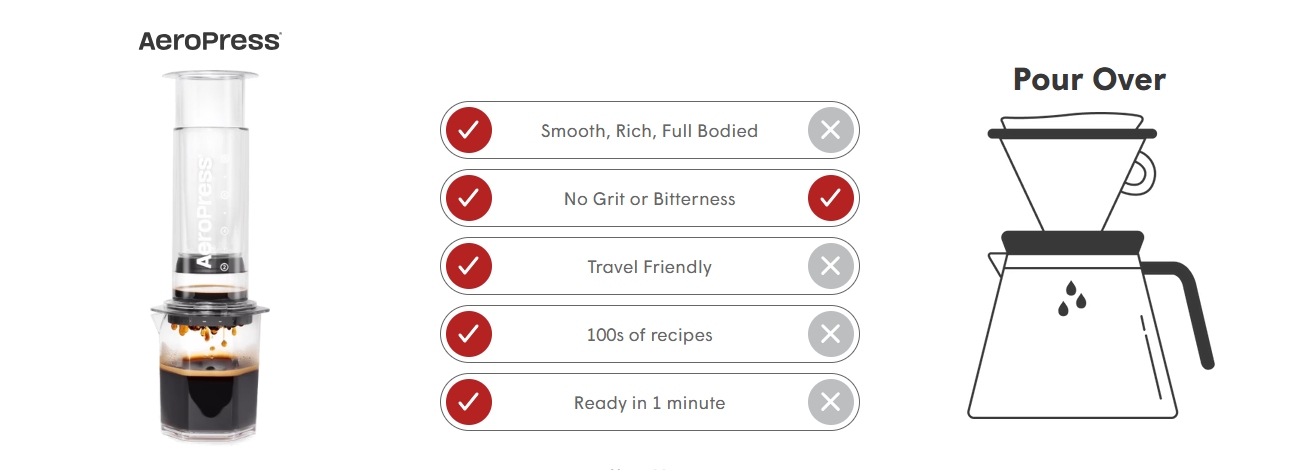
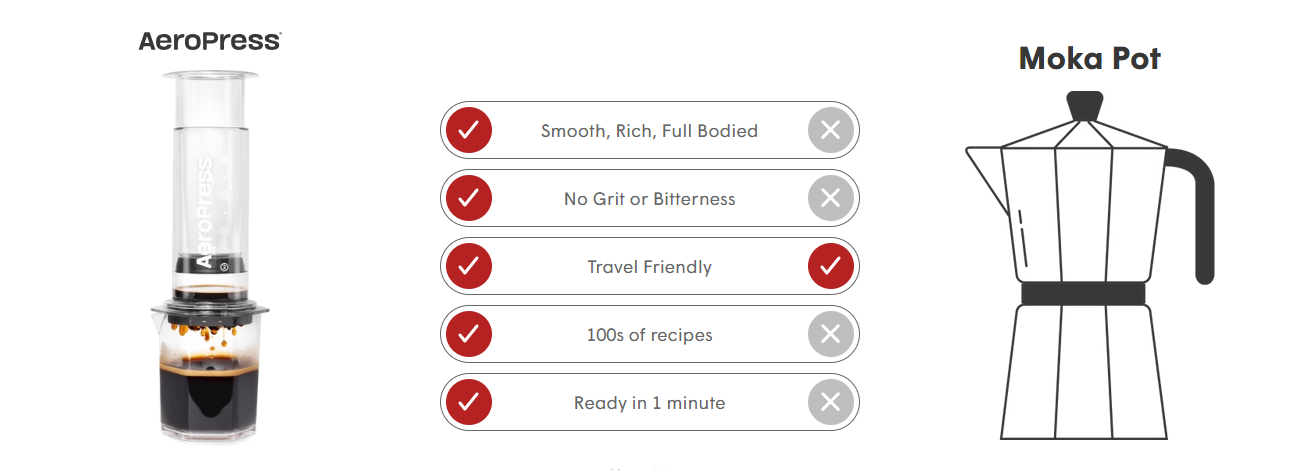
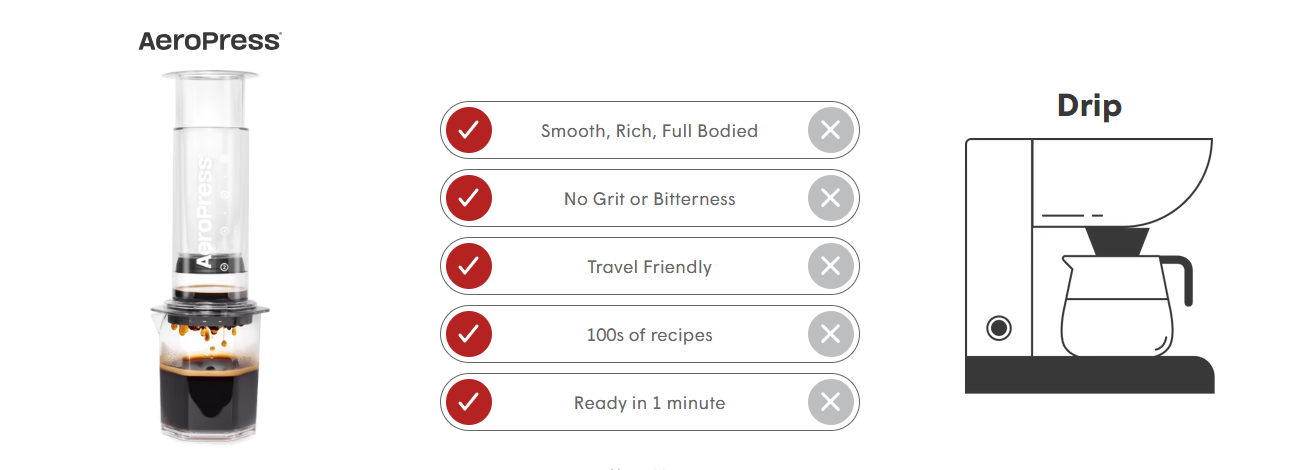
Press for Better Coffee

Complete Your Routine
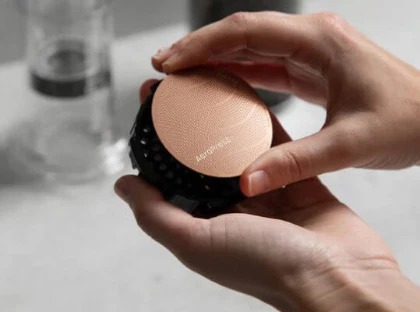
Accessories
All the AeroPress accessories you need to help you find your inner barista.
Coffee
Explore 200+ coffee roasts custom ground to medium-fine for AeroPress.
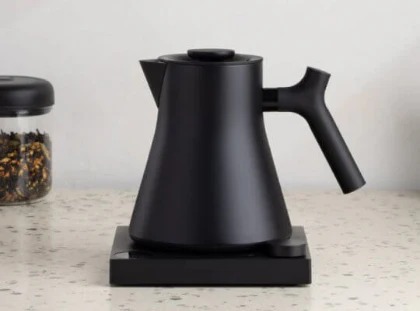
Kettles & Grinders
Our favorite coffee gear that pairs perfectly with your AeroPress coffee maker.


The AeroPress Kitchen
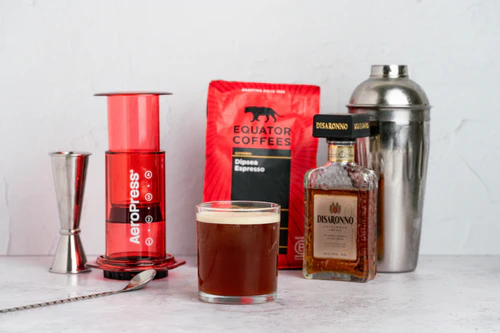
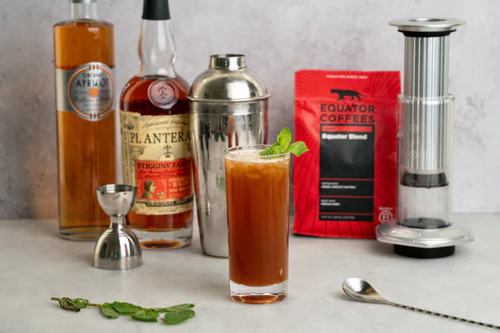
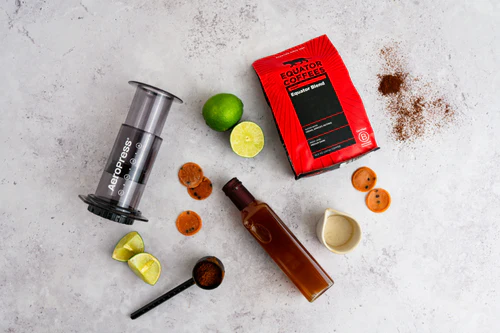
AeroPress Tropical Coffee Amaretto Sour
Coffee • Gin • Yuzu Juice
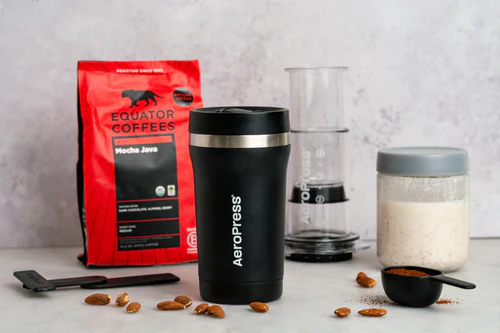
Homemade Almond Milk Cold Brew with AeroPress Go Plus
Coffee • Almond Milk • Ice

AeroPress Strawberry Latte
Coffee • Strawberry • Milk
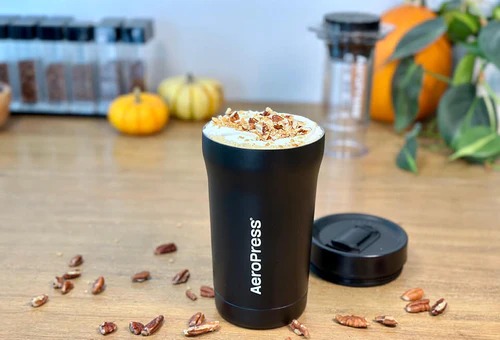
Maple Pecan AeroPress Latte
Coffee • Pecan • Milk

Baratza Vario W+ with AeroPress
Coffee • Water
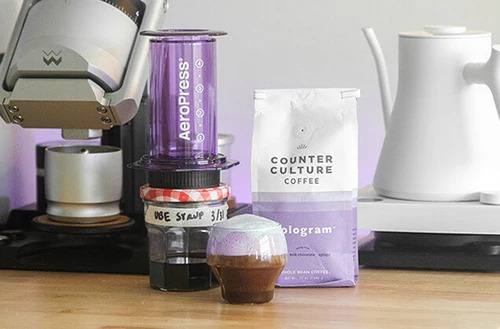
Ube Einspänner AeroPress Latte
Coffee • Ube Extract • Cream

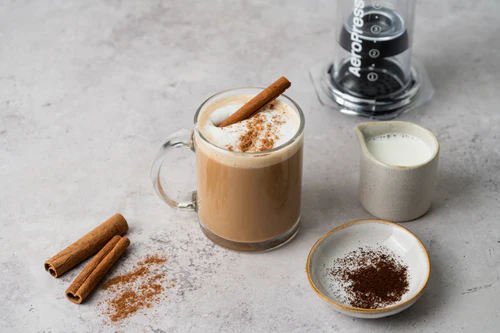

AeroPress Pistachio Honey Iced Latte
Coffee • Pistachio • Milk

Espresso Martini with Tequila and Salted Caramel
Coffee • Tequila • Caramel

Espresso Martini with Vanilla Recipe
Coffee • Vodka • Vanilla

AeroPress Iced Boo-Berry Matcha Latte Recipe
Coffee • Matcha • Milk
Experience Aeroprass


Classic Recommendation.
The Technology and Engineering Behind the Perfect Extraction
Title: Precision in the Cup: Understanding the Engineering of Modern Brewing Systems
The journey from a roasted bean to a perfect cup involves a remarkable interplay of physics, chemistry, and precise engineering. Modern coffee brewing apparatuses are sophisticated systems, far removed from their rudimentary predecessors. They represent a culmination of decades of research focused on manipulating fundamental scientific principles to achieve optimal flavor extraction. Understanding the technological components of these devices reveals why they are so crucial to producing a consistently high-quality beverage.
At the core of any brewing system is the heating element and temperature control. This is perhaps the most critical component. Water that is too cool will result in under-extraction, leading to a weak, sour, and grassy flavor profile. Conversely, water that is too hot can cause over-extraction, yielding a bitter, hollow, and medicinal taste. The ideal temperature range is surprisingly narrow, typically between $90^circtext{C}$ and $96^circtext{C}$. High-end machines utilize sophisticated thermoblocks or boilers and PID (Proportional-Integral-Derivative) controllers. The PID system is a feedback loop mechanism that monitors the water temperature in real-time and adjusts the heating element’s power to maintain the temperature with minimal fluctuation, often within a single degree of the target. This thermal stability is the foundation of a balanced extraction.
Another vital element of the process is pressure and flow dynamics, particularly in systems designed to create concentrated, high-intensity shots. These specialized machines employ powerful pumps capable of generating immense pressure—up to nine times the atmospheric norm—to force hot water through a tightly packed bed of finely ground coffee. The engineering challenge here is to maintain this high pressure consistently throughout the entire duration of the shot, which is typically a short timeframe of around 25 to 30 seconds. The pump’s ability to deliver water at a constant flow rate and pressure is paramount to ensuring that the extraction is even, preventing “channeling”—where water finds the path of least resistance and bypasses large sections of the grounds.
Furthermore, the grinding mechanism, when integrated into the appliance, plays a decisive role. The particle size distribution of the grounds directly influences the extraction rate. A high-quality integrated mill employs burrs, rather than blades, to crush the beans uniformly. Burr mills, whether flat or conical, are essential because they produce a consistent and predictable particle size. This uniformity allows the water to saturate and extract the soluble compounds from all the grounds at a similar rate, preventing the simultaneous occurrence of under-extracted fines and over-extracted coarse particles within the same brew. The quality of this grinding technology is often a major differentiator between entry-level and advanced systems.
Finally, the material science of the components that contact the water and the finished beverage also contributes significantly to flavor integrity. Materials are chosen not only for their durability but also for their neutrality. Stainless steel and high-grade ceramics are preferred for boilers and brewing heads because they do not impart unwanted flavors or chemical residues to the hot water. Even the design of the showerhead—the part that disperses water over the grounds—is engineered for optimal performance, often featuring multiple small holes to ensure a gentle, even saturation of the entire coffee bed, maximizing the contact surface area and promoting uniform extraction.
In summary, the modern brewing device is a testament to applied science, a meticulously calibrated instrument where temperature, pressure, time, and particle size are precisely controlled. It is this behind-the-scenes engineering—the quiet, sophisticated operation of PID loops, powerful pumps, and uniform burr mills—that allows the user to reliably access the complex, nuanced flavors locked within the coffee bean, transforming the potential energy of the grounds into a perfect sensory experience.